


OurHistory
The story of Agamon HaHula: a drama of sky, water and land, and of people who learned from their mistakes.
The story of the Hula Valley is a fascinating historical, environmental and human drama. It is a story of a powerful meeting between sky, water and land, of a human attempt to take responsibility for nature, of mistakes learned along the way — and of one of the most impressive and successful environmental restoration projects in the world.
Geographic and geological setting
The Hula Valley lies at the heart of the Great Rift Valley (a giant tectonic fault stretching for thousands of kilometers). The valley is bordered by steep cliffs and geological faults: the Golan Heights to the east, the Naftali Mountains to the west, the Korazim plateau hills to the south, and the Metula plateau and Lebanon mountains to the north.
Until the mid-20th century, Lake Hula (approx. 13 sq km) stretched across the south of the valley, with seasonal and permanent swamps north of it (additional 47 sq km), covered by a dense thicket of papyrus sedge. The water level changed dramatically between seasons, and the flooded area ranged from 8,000 to 47,000 dunams.
People and the valley: from prehistory to Zionism
Thanks to its bounty of water, vegetation and animals, the Hula Valley has been a vital lifeline for humans since prehistoric times. The valley's natural richness is what allowed early humans — hunter-gatherer societies — to move from a nomadic life to the first permanent settlement in history, even before the dawn of agriculture. Two archaeological finds of exceptional international importance were uncovered in the Hula Valley: at the Einan site (Ein Mallaha), remains of the first permanent settlement of the Natufian culture were found, and at the very same site the earliest evidence in the world of dog domestication was uncovered — a moving burial of a woman alongside a puppy.
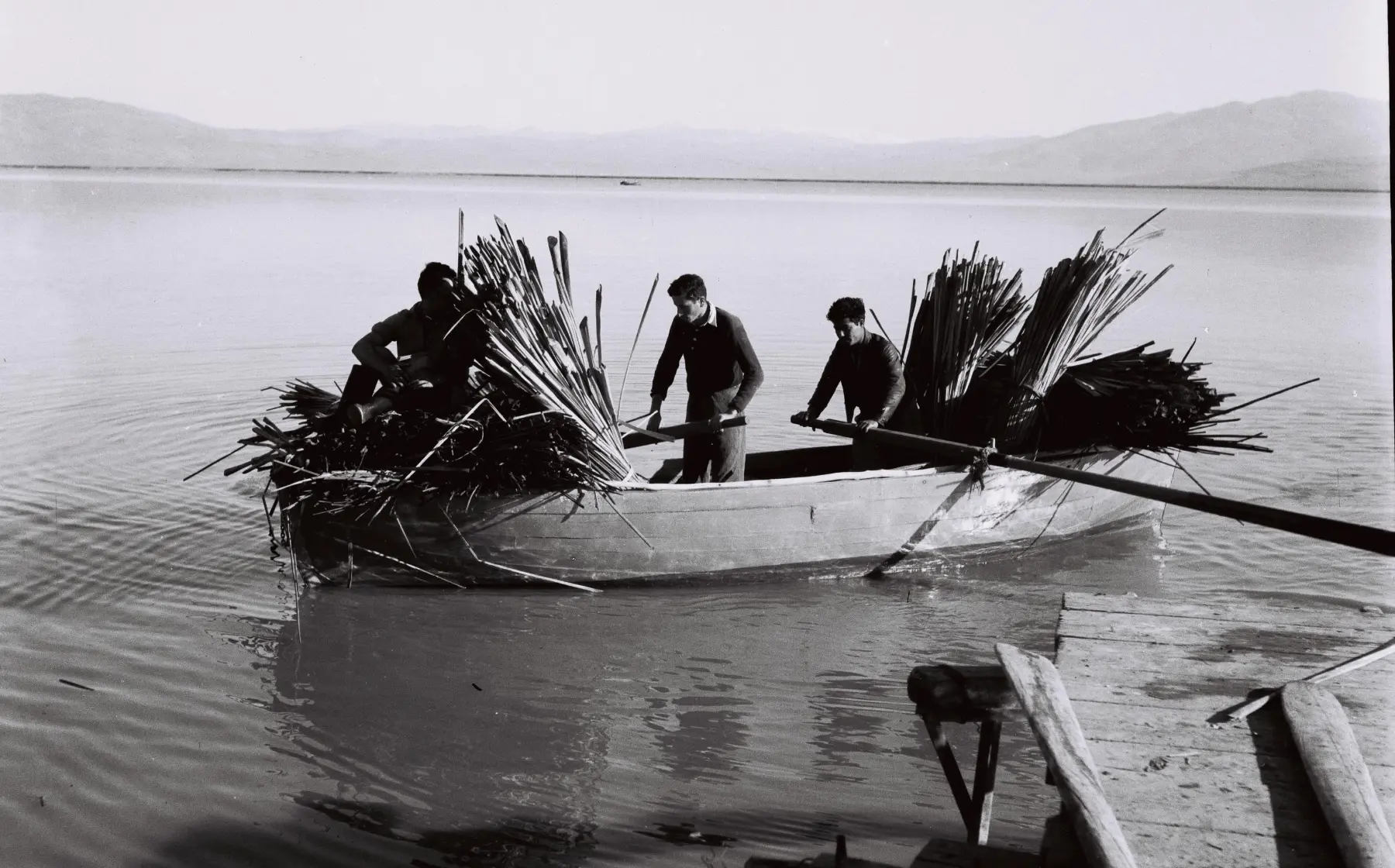
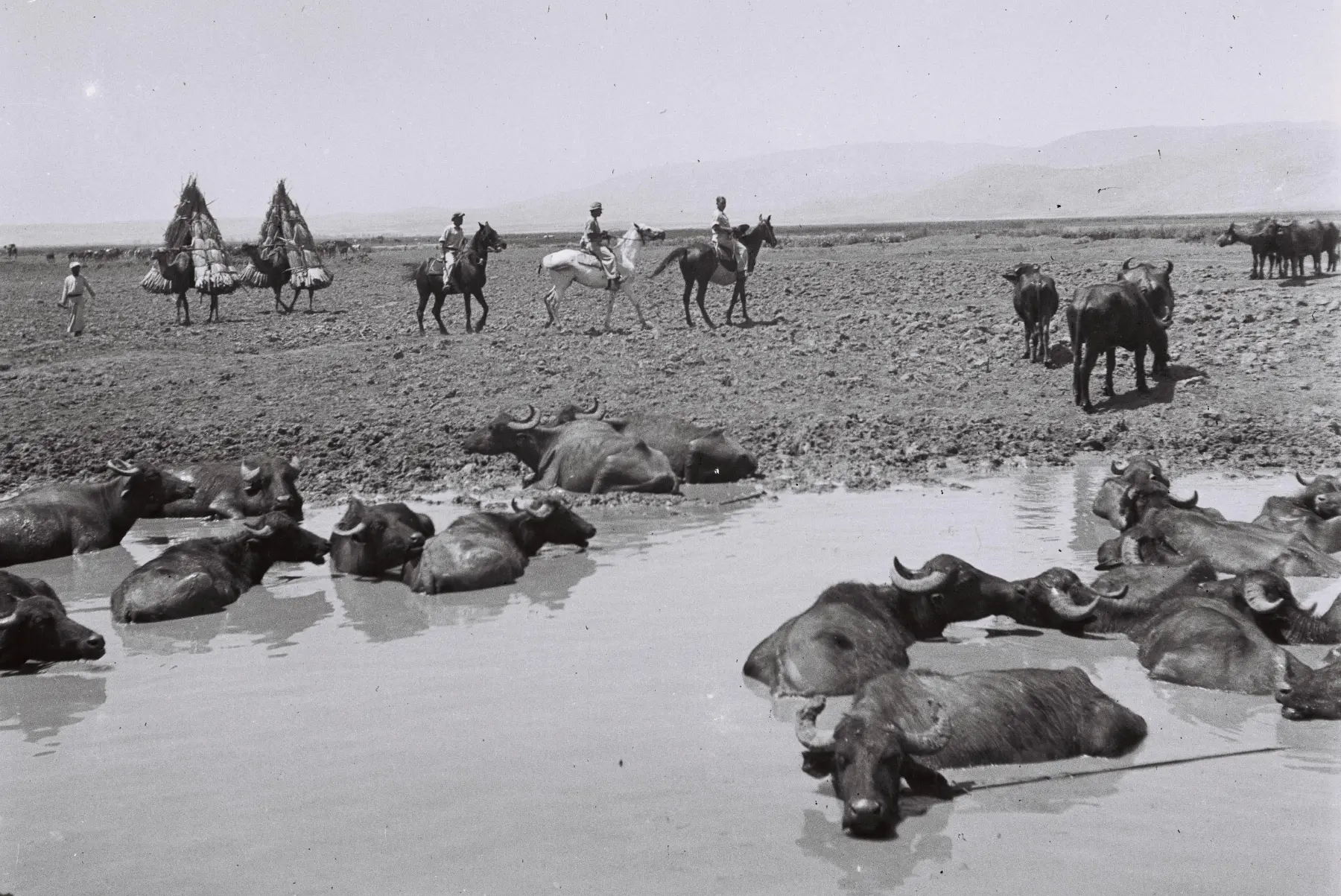
Later in history, in the ancient world, the valley continued to serve as a major transport and trade route as part of the 'Way of the Sea' (Via Maris), and in biblical times the cities of Hazor in the south and Dan in the north stood out. In the Ottoman period the valley was settled by the Ghawarna tribe — a Bedouin tribe that made its living mainly from herding water buffalo, fishing and weaving mats from reeds and papyrus. In the late 19th century, with the beginning of Zionist settlement, the first colonies were founded in the valley, led by Yesud HaMa'ala and Kibbutz Hulata, which struggled with severe hardships, above all malaria.
The valley's natural richness is what allowed early humans to move from a nomadic life to the first permanent settlement in history.

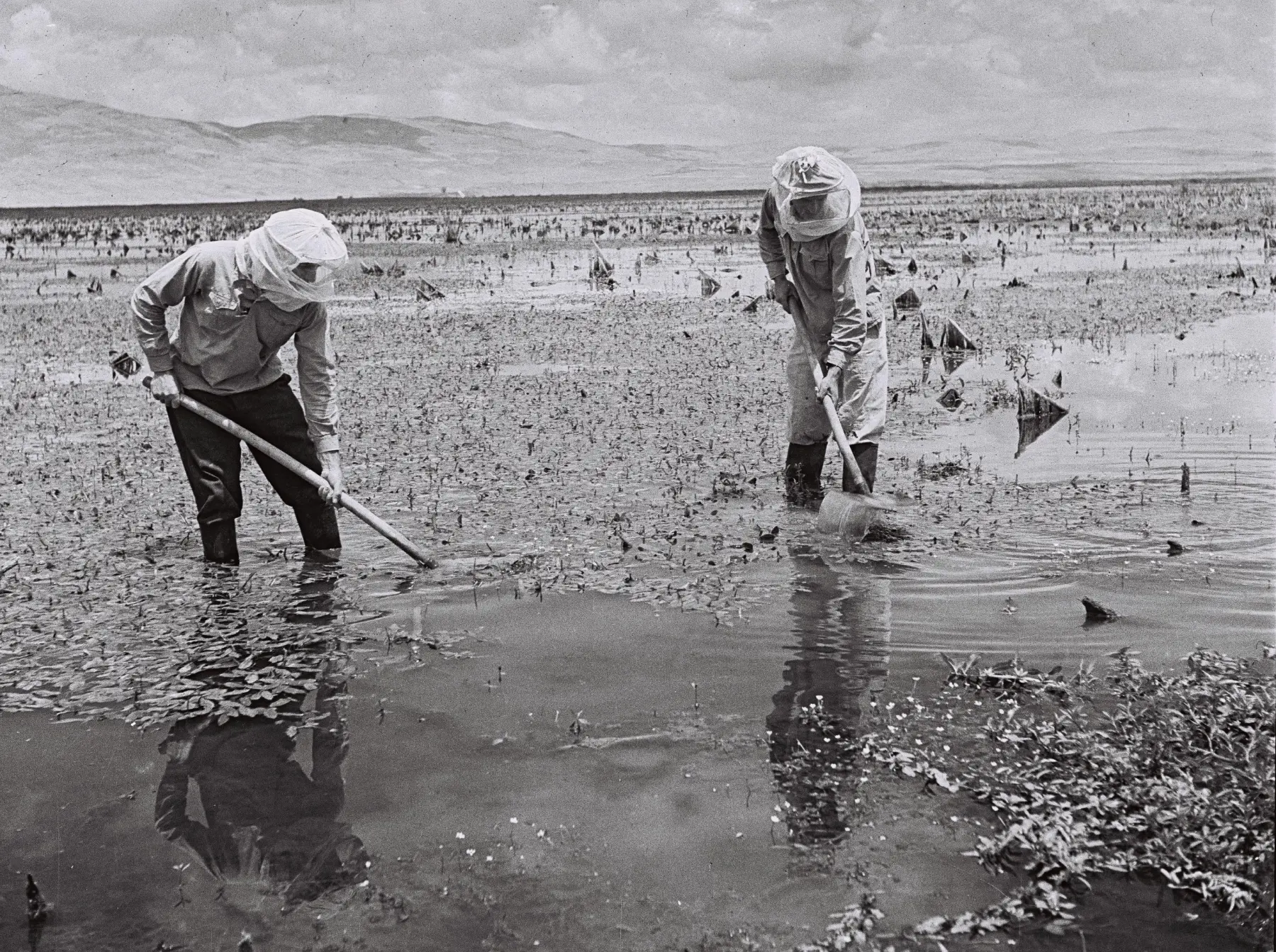
The Hula drainage project, 1951–1959
In 1951 the Government of Israel initiated the Hula drainage project, carried out by Keren Kayemeth LeIsrael (KKL) — one of the largest and most significant national engineering projects in the country's history.
The project's original goals
- Creating farmland: Adding tens of thousands of dunams of fertile land to expand settlement and agriculture.
- Saving water: Reducing evaporation from the lake and swamps (from 68 million cubic meters per year to approx.. 40 million) and channeling the water southward for national use.
- Utilizing resources: Extracting peat (dense organic matter formed by decomposing swamp plants) as a raw material for fertilizer and energy.
- Development and employment: Paving roads for security needs and providing jobs for the masses of new immigrants.
The drainage was carried out by digging two huge drainage canals and deepening the Jordan riverbed. The project added about 60,000 dunams of farmland. At the southern end of the valley, the Hula Nature Reserve was established (Israel's first declared nature reserve, about 3,000 dunams) to preserve a remnant of the original swamp system.
The environmental and ecological crisis
During the 1970s and 1980s it became clear that the drainage had unforeseen the environmental and ecological repercussions:
- Land subsidence and underground fires: The peat soil exposed to the air underwent complex oxidation processes, lost volume and sank at an unprecedented rate (up to 7 meters in the center of the valley!). The oxidation released a great deal of heat and caused prolonged underground fires that lasted for months.
- A threat to the Sea of Galilee's water quality: The breakdown of organic matter in the soil released growing amounts of nitrogen and phosphorus compounds. With the winter rains, these were washed through the drainage canals straight into the Sea of Galilee, endangering what was then the country's main source of drinking water.
- Harm to biodiversity: Draining the swamp led to the loss of habitats, the extinction of plant and animal species, and severe damage to the vital stopover for migrating birds.
As soil quality deteriorated, farmers were forced to abandon about 5,000 dunams in the center of the valley.
Restoring the peat soils and creating the Agamon HaHula
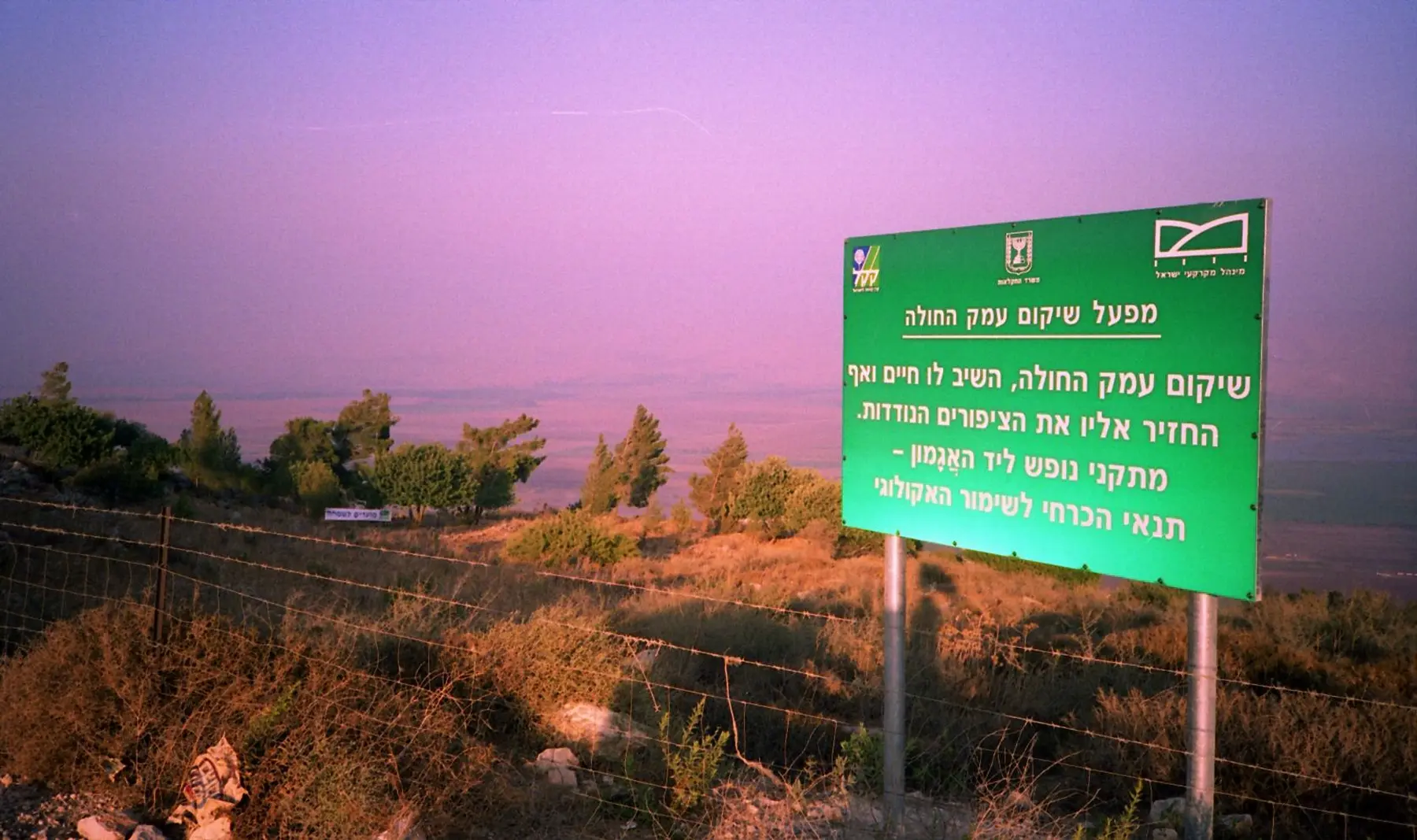
Following the environmental crisis and real concern for the Sea of Galilee's water quality, KKL-JNF, scientists, farmers and state authorities conducted an in-depth rethinking process.. The conclusion was clear: the key to saving the valley lay in bringing back the water and restoring the soil's natural balance.
In 1993 the Hula Valley peat soil restoration project was launched — an unprecedented environmental engineering operation led by KKL-JNF. As part of the project:
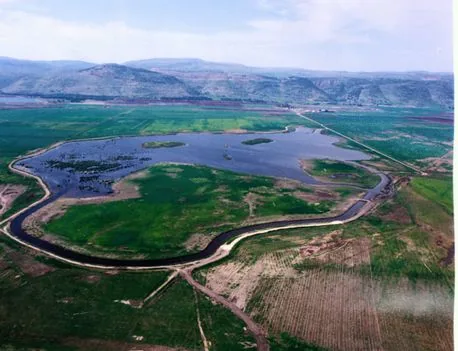
- The center of the abandoned area was dug out and re-flooded thus creating the Agamon HaHula, covering about 1,100 dunams (within a park complex of about 5,000 dunams).
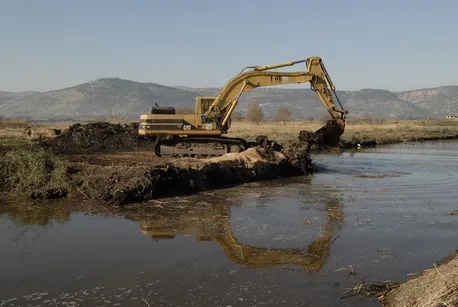
- About 100 km of perimeter water canals were dug and nearly 200 hydraulic structures were built, allowing precise control of the groundwater level — preventing the peat from drying out and oxidizing in summer, and allowing controlled drainage in winter.
- The historic, restored course of the Jordan riverbed was re-dug, and native bank vegetation was reintroduced to create a thriving ecosystem.
Neverending restoration: ongoing work and maintenance
The restoration turnaround is not a one-time event that has ended, and most likely never will. It is a complex system that requires continuous maintenance, operation and daily engineering-ecological work all year round. To ensure that maintenance and management in the field truly suit nature, support it and are precisely tuned to it, the project is accompanied by multi-year ecological monitoring. The monitoring serves as the scientific 'compass' of the restoration, making it possible to study the area in real time and adapt management to the ecosystem's changing needs.
Flying into the future
Today, the Agamon HaHula–KKL-JNF Nature and Birdwatching Park stands at another exciting stage in its development. A new, comprehensive master plan for Agamon HaHula is currently being developed, marking the next step in deepening the ecological restoration and improving the visitor experience:
- Creating unique habitats and enriching biodiversity: The plan includes restoring and creating rare habitats that have disappeared from the valley's landscape, including bringing back swamp areas, expanding wet meadows, and establishing spectacular carpets of white Water-Lily and other rare aquatic plants. These steps will enlarge the diversity of animal and plant species in the park.
- Upgrading the visitor experience and interpretation: The plan will make the wonders of restored nature accessible in advanced experiential ways, combining educational content, upgrading trail infrastructure and deepening the direct connection between the public and nature.
- Consolidating research and regional sustainability: Continued consolidation of the Agamon as an international research center for wetland restoration, and highlighting the winning model of cooperation between agriculture, science, community and ecotourism.
Timeline

A new master plan: unique habitats, a renewed visitor experience and consolidated research.

From a historic mistake to one of the world's most successful restoration projects
The story of the Hula Valley continues to be written here, every day.